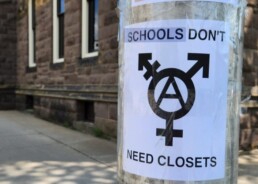
New Brunswick reverses course on Policy 713 after Holt victory
As of January 1st, 2025, the New Brunswick government is no longer demanding that trans youth forcibly out themselves to their parents in order to use their chosen name or pronouns at school.
Following an electoral sweep in which former New Brunswick premier Blaine Higgs lost his seat, fellow trans community members expected swift action in getting rid of changes made to Policy 713, “Sexual Orientation and Gender Identity”, which endangered the well-being of trans youth — action that was promised by Premier-elect Susan Holt, New Brunswick’s first woman premier. It is unfortunate that the changes came two months later (and not on day one), but this remains a positive development, a rare one within the current climate of legislated and consented anti-trans hate sweeping across Canada.
In a news release, Amnesty International Canada welcomed the changes, stating: “This is a step forward for 2SLGBTQQIA+ rights in New Brunswick, and we urge provinces like Alberta and Saskatchewan to follow suit without delay.” The Canadian Civil Liberties Association, which led a lawsuit against said changes back in 2023, equally welcomed the changes. As for trans youth themselves, a sense of relief could be felt.
As a reminder, the process by which Policy 713 was initially modified — creating Canada’s first legally-in-effect anti-trans legal text of the decade — was filled with controversy. The previous Progressive Conservative government could only produce, to quote New Brunswick’s Child and Youth Advocate, “three emails in thirty months” attacking trans youth, citing, amongst other things, anti-Christian discrimination and the World Economic Forum as reasons. Talk about pure insanity!
Anti-trans hate is not popular. Fae Johnstone, a nationwide trans organizer, stated: “So uhhh do you think Blaine Higgs regrets changing Policy 713? That single decision marked the beginning of the end.” A similar situation played out in Saskatchewan, in which the Sask. NDP pulled off the strongest opposition it has had in more than a decade, subsequent to a similar anti-trans policy introduced on even more anti-democratic terms. It remains to be determined whether similar events will play out in Alberta or in other Canadian jurisdictions, but one thing is certain: people do still care about human rights for all.
For further reading, I’d strongly recommend reading this article by Reid Lodge on NB Media Coop!
Alberta introduces Canada's most draconian anti-trans legislation thus far
Note: This is a “statement” from Celeste’s Instagram page, retroactively posted to her website. The bills in question were passed on December 3rd, 2024.
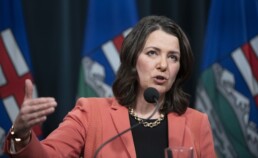
On October 31, 2024, the Alberta government, led by United Conservative Party leader and Premier Marlaina Danielle Smith (who goes by her middle name Danielle), introduced three pieces of anti-trans legislation that goes beyond anything else we’ve seen thus far in Canada: Bills 26, 27, and 29.
The three bills, being the Health Statutes Amendment Act, 2024 (No. 2) (Bill 26), Education Amendment Act, 2024 (Bill 27), and Fairness and Safety in Sport Act (Bill 29), creates a social context in which trans people are actively punished for being trans, and nothing more: these bills significantly restrict the social participation of trans youth in particular, preventing them from thriving the same way as their cisgender peers would.
Alberta Bill 26 implements the gender-affirming care ban Danielle Smith promised back in January 2024 — which, would be Canada’s first. Bill 26, being an omnibus bill, modifies the law as it pertains to a variety of fields as it pertains to healthcare, but most notably the Health Professions Act, which regulates health professionals in Alberta.
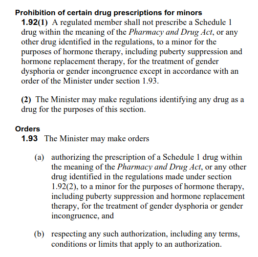
Said bill restricts medically necessary healthcare for vulnerable youth, by forbidding Alberta regulated healthcare professionals, such as doctors and pharmacists, from prescribing puberty blockers and hormone therapy to a person age under 18, through an amendment to the Health Professions Act. It also prohibits surgeries related to gender affirmation for said youth. The bill enables the government to define exceptions by order-in-council, with which the UCP government has announced its intention to carve out an exception for youth aged 16-17 and introduce a ‘grandfather clause’. However, whether it will follow through with that or no remains to be determined.
Here is a copy of some of the relevant provisions of said bill:
Back when the measure was first announced in a Twitter video at the end of January 2024, the Alberta Medical Association’s Pediatrics section (and later the AMA itself), the Canadian Pediatric Society and Amnesty International Canada have voiced their opposition, the bills being contrary to medical best evidence and practice. Skipping Stone, a Calgary-based organization serving the local 2SLGBTQ+ community, has promised to sue, and has subsequently filed a lawsuit alongside Égale Canada and fellow Albertan families with trans youth. More broadly speaking, mainstream medical organizations have unanimously come out against gender-affirming care bans, for the same reasons, and have held their position despite bullying by politicians.
The Education Amendment Act, 2024 is Canada’s worst anti-trans education bill thus far. First and foremost, it requires opt-in consent for sex ed — a measure targeting all youth in Alberta, and which not only denies 2SLGBTQ+ people’s ability to see themselves within said curriculum, but equally denies knowledge about consent, puberty, and the human reproductive system. Even for students whose parents opt-in their kids into said classes, Alberta school boards will be forbidden from using learning and teaching resources “that deal primarily and explicitly with gender identity, sexual orientation or human sexuality” without Ministerial approval.
As it pertains to trans youth though, it gets worse. Said bill forbids a student under age 16 from using a new chosen name or pronouns without parental consent. It also mandates, for all students under the age of majority (being 18 in Alberta), that the school board must notify the student’s parent(s) if the fact that said youth wishes to use a new chosen name or pronouns is brought to the attention of the school board, the school, or even just a teacher — forcibly outing their identity to their parents. Research by the U.S.-based Trevor Project in 2022 has revealed that fewer than one in three trans youth found home to be a safe space for them, as a trans person; for the other two in three youth, it can push them to consequences as severe as homelessness or suicide. Teachers and school staff are explicitly forbidden from using the chosen name or pronouns of their student in school unless said criteria is respected. The legislation explicitly states that this restriction only applies if the chosen name is chosen for gender identity-related reasons — a cisgender student, who say, wishes to go by Chris instead of Christopher, would not be affected, unless they are doing so because of their gender identity. Finally, said bill also forbids anyone from suing the government, schools, or school boards for any damages arising from forced outing, deadnaming or misgendering. Talk about arbitrary!
Finally, Bill 29, the Fairness and Safety in Sport Act creates a legislative framework requiring school boards, charter and private schools, public post-secondary institutions and provincial sport organizations to establish policies “respecting fairness and safety with respect to each relevant sport”. Said policies must then dictate “eligibility requirements to participate in the relevant sport” and processes to determine this, and “provisions or content prescribed by the regulations”. Danielle Smith has announced that the intent of the bill is to ban trans women from women’s sports teams, something which will be implemented through such regulations. This bill would even apply within the context of mandatory physical education courses, once again disproportionately impacting trans girls. Finally, similarly to the Education Amendment Act, a non-liability clause is included, to make sure that any affected trans person has no legal recourse whatsoever to sue the government.
These bills, as a whole, will have a devastating impact on trans youth, trans women, and trans people as a whole in Alberta. We can infer answers on how bad this impact would be from our southern neighbors. In U.S. states with anti-trans legislation passed into law, the incidence of suicide attempts per year among trans young people has increased, according to a study published in Nature, by up to 72%. As for the positive impacts of gender-affirming healthcare, they’re well-documented: outcomes are overwhelmingly positive, and enable trans youth to become well and healthy trans adults — instead of dead trans youth or unwell trans adults.
Whether these bills will stand up in court will depend on both the test of time, and whether the Alberta legislature invokes the notwithstanding clause of the Canadian Charter (update: they likely will). One thing remains certain though: the impacts of these bills cannot be understated.
Opinion: Trans people are scared. Canada needs to act.
Republished from the Toronto Star, where this opinion piece I wrote was first published. Read the original: https://www.thestar.com/opinion/contributors/trans-people-are-scared-canada-needs-to-act/article_f99f6648-108b-5790-94c1-b36a23366f34.html
Over the last few decades, every major study regarding gender identity has shown that gender-affirming care has significant therapeutic benefits. Medical associations listened and updated their guidelines accordingly. However, I have watched in horror as, over the past few years, science has taken the back burner; for many, ideology trumps fact.
In Missouri, attorney general Andrew Bailey issued an emergency order, effectively banning gender-affirming health care for all people needing it — adults included. Out in Florida, lawmakers are attempting to remove child custody over parents listening to the science. Many trans people — and their families alike — have resorted to fleeing their homes, in the face of state-sanctioned anti-trans policies. Countless advocates have pleaded to state legislatures, but to no avail: instead of listening, they’ve been censoring the very politicians challenging their ideology. “Free speech for me, not for thee.”
Attacks against gender variance aren’t new. Almost exactly 90 years ago to the day, the Institut für Sexualwissenschaft — the world’s first modern sexology institute, pioneering trans health care — was burned by the Nazis. Knowledge and lives were lost, but trans, non-binary and Two-Spirit people didn’t stop existing: we went into hiding.
We’re not safe here in Canada either. Recently, Quebec Conservative Party leader Éric Duhaime introduced an anti-drag petition, garnering over 40,000 signatures. Protests against gender nonconformity at large have exploded across the country these last twelve months; drag defence, similarly to abortion clinic defence, has become an unfortunate necessity.
School boards are facing backlash for being inclusive, and law societies are being brigaded by actors fighting against so-called “gender ideology.” Friends are writing to me stating that they’re feeling unsafe. It’s a dark sign of what’s to come.
So, why aren’t we doing more to counter this tsunami of hate? We’re currently at an inflection point — either Canada can become a safe haven where gender diversity is accepted, or trans people will no longer have anywhere else on the planet to flee.
To avoid past mistakes, we need to start taking proactive action. Our statutes and courtrooms need to become shields against the dismantling of our civil liberties. Our governments need to create concrete action plans — seawalls — to stop hate from being imported here.
The onslaught against trans people worldwide will soon bring over its number of refugees. I believe it is our moral duty to welcome those fleeing from abroad. We’ve been, for a long time, recognized as a leader for 2SLGBTQ+ rights: it’s time for us to reinforce said commitment and transform perception into reality.
It’s in times of crisis that leadership truly shines. With the current attacks against gender variance in the U.S., U.K., Uganda and elsewhere, we have a unique opportunity to set ourselves apart, for the better. Do we double down on our constitutional, Charter principles — including the protection of minorities and the right to equality — or do we abandon them for good, sitting on a maple-gilded ivory tower? The choice is ours.